National Adoption Day at Exploration Place was awesome, but you don’t have to adopt to impact foster kids’ lives!

I read a couple articles in the Eagle about National Adoption Day celebrated at Exploration Place yesterday. The coverage was decent, but it was weak in one sense. The coverage should have ended with telling the Eagle’s readers what they can do to C6B95AD6-DFC0-44A7-AA45-30FAA4A3D68Chelp foster kids. Here’s why.
Last year we averaged around 1200 kids in out of home placements each month in the Wichita Region—not new fosters, the overall average. This year that number is around 1400. I have one of the busier dockets in Sedgwick County, and Sedgwick County has the largest number of new filings in the state, so I have a good perspective in this issue.

The problem is that we do not have enough local foster families to take care of these kids. Indeed, sometimes we don’t have any immediate placements so they must stay in contractors’ offices for multiple nights, sleeping on cots. Granted, sometimes these kids have behavior issues and might even pose a danger to the families that take them in, but this is rare. Mostly it’s simply a matter of not enough 0E277593-CEFF-46BD-AECD-71F53B4AA2AChomes in Wichita. This is really a problem with families of 3 or more kids, with one or more having health issues that need attention. When this happens, siblings are split up and some are placed an hour or more away from here, with two or more hours not being rare. This makes it difficult for parents to keep up regular visitation schedules, and traumatizes kids who have to spend several hours in caseworkers’ cars traveling to and from visits. It’s even worse when they travel for two or more hours then have parents cancel visits. You can imagine what the kids go through when this happens.

“Mom must not love me or she’d be here.”

The reality is that sometimes employers threaten the parents with termination if they leave work for visits, so sometimes they have to decide whether losing their jobs, which the court ordered them to retain, or missing a visit, also court ordered, is priority. This isn’t as big an issue if the kids are placed locally—they can reschedule visits or sometimes have more than one visit a week. So if you are called to foster, to give time 24-7 to these kids, don’t wait. We have several providers in Sedgwick County such as EmberHope, DCCCA, Salvation Army, and Saint Francis Ministries.

The article also left out other, less time consuming options for concerned citizens. You can volunteer as a Court Appointed Special Advocate or Youthrive mentor. As a CASA volunteer or Youthrive mentor, you walk beside the kids and make sure all those involved are looking out for the children’s best interests, and are complying with court orders to ensure permanancy for these kids sooner rather than later. As for CASA, one impact that stands out is on these troubled kids’ high school graduation rates. Without a CASA, it’s just 50%; with a CASA, its over 80%!

1CE98EA2-91AE-4027-BE96-14959A3EE6B4Finalizing through adoption is fantastic. But that’s just 30% of the case outcomes for foster care. It’s the 70% that needs the most attention, the kids who face much of the bad consequences of spending all or part of their lives in foster care. It’s not a coincidence that 80% of the men and women incarcerated in our nation’s prisons and jails were fosters. You can impact these kids by stepping forward and giving them a stable home to live in while they are in foster care (in Kansas, the average number of placements for foster kids in 24 months is just over 5!), mentor them as a CASA or Youthrive advocate, and perhaps be willing to adopt if the opportunity arises.

I’d love to talk to your civic organization or church about volunteer opportunities in the foster care system. You and your friends can make a huge impact in these kids’ lives. Email me at 4acelaw@sbcglobal.net if you’d like be to present at your group, or send my contact info to your pastor or group leader.

Everyone needs to help Kansas foster kids, especially you!

A couple weeks after my mission to observe Florida dependency courts, the momentum to improve the Kansas foster care system is not abating. I immediately implemented changes on my docket to improve the timeline for permanency for my kids, and DCF is responding. Last week we met with a couple DCF representatives and they shared with us their improved timeline for adoption finalizations. I’m greatly encouraged that DCF is following up our Florida discovery that Kansas can improve its outcomes with action!

But here’s the reality. Bureaucratic changes take time. Lots of time. I seriously doubt even the latest momentum will be noticeable on case outcomes until a good year or more down the line, and if we see a change in political party occupying the Kansas Governor’s mansion next week, the momentum might stop dead in its tracks. Thus, I’m compelled to get back to what I’ve been saying and seeing for my entire career on the bench. YOU ARE THE SOLUTION TO THE KANSAS FOSTER CARE CRISIS!

Group Of Young Children Running Towards Camera In ParkWe need good families fostering these kids. We need good people serving as CASA volunteers to advocate for these kids. We need more Youth Horizons mentors, and Youthrive mentors for kids who age out of the foster care system. We don’t need new DCF policies to improve foster care outcomes next week or even next month. We need more people like you.

Here’s my ask of you. You probably belong to a church or civic organization. I’ve been presenting foster care to community groups the past couple of years and they always respond with love and caring by volunteering and supporting great organizations that help kids daily. Why hasn’t your group called? Talk to your pastor or leader of your group. Tell them I’m ready, willing, and able to talk to your group.

Good news is that the community group support for kids is growing too. I’m already scheduled to either present or help pastors present foster care volunteer opportunities two weekends in January (the 5th and 12th), as well as a civic group on the 17th.

70% of all men and women incarcerated in our jails and prisons were in foster care as children. Had they had good people like you fostering or advocating for them as kids they might have turned into productive, authority-respecting citizens with powerful testimonies about how someone loved them so much that they gave their time as foster parents or advocated for them in court.

Please email me at ksmith@dc18.org if you would like me to talk to your pastor or leader of a civic group about how he or she can help get the word out.

Kansas Foster Care shouldn’t be average because kids deserve more and we owe it to them

A few months ago I ran across an article on Florida’s Early Childhood Intervention Courts, a program used for foster children ages 0-3 years. To include an infant mental health specialist, the program involves a multidisciplinary team that meets with the biological parents regularly and focuses on the child’s mental health issues that interfere with a proper parent-child relationship. The court prods things along by holding monthly hearings to check progress. Clearly, this requires many more resources than the typical foster care case, but it achieves amazing results and virtually eliminates children being placed back into the foster care system after reintegration. I showed the article to my presiding judge and he suggested that I travel to Florida to see how the teams and courts implement this program. My chief judge approved and I planned for this “exploratory” trip, skeptical that I’d learn anything that could be implemented before the Kansas Dept. of Children and Families (DCF) made dramatic changes in Topeka.

What began as an information gathering trip on a limited set of cases quickly evolved into something much more. I invited DCF to send a representative, as well as the District Attorney’s office. Not only did DCF respond favorably, but DCF Secretary Gina Meier-Hummel, and Regional Director Thomas Buell joined our team, as well as an ADA and Court Services Officer. This was just the beginning of the surprises to come.

IMG_6615Before I share what we discovered in three very populous Florida counties (Dade, with more than 3 million; and Palm Beach and Broward, with more than 1.5 million each), it’s important to understand that when compared to national averages, Kansas is just that, average. Average case length for all case plans is 19.7 months, average; the average for adoptions is 30 months, average; and just about every other measure is also average. Thus, except for the profoundly improved outcomes for 0-3 cases, none of us expected to pick up much from observing the Florida “dependency” courts that could dramatically impact all Kansas cases.

I can sum up the most shocking surprise of our trip in this way. Shooting for the averages when contrasted with the results in the Florida system (which, but the way, also uses private contractors), as well as Texas, for that matter (I’ll get back to Texas later), has set our foster care system house on fire and before we can pursue anything like Florida’s Early Childhood Intervention Courts we must put out the fire.

Florida judges aim for permanency at 12 months with an average case length of less than 18 months. Average case length for adoption is under 24 months. Judge Cindy Lederman in Dade County, Judge Kathleen Kroll in Palm Beach, and Judge Hope Bristol of Broward believed their adoption cases seldom stretched out past 18 months. A few things these Florida judges did, with total support of Florida’s DCF, was order termination motions to be filed at 6 months and proceed with termination at 9-12 months if the parents continue to be noncompliant. Also, every kid gets the Florida equivalent to a Court Appointed Special Advocate (CASA). Most important, these judge order concurrent case plans of Reunification and Adoption from day one so once it’s clear reunification isn’t viable, the contractor and DCF have already begun on adoption tasks. Following termination, adoptions are finalized in 90 days. The only substantial delay is when parents appeal terminations, which adds 4-5 months. In Kansas, we’re lucky to finalize 12 months after termination. When considered in light of Florida’s system, this is unacceptable.

The most shocking event that happened was in Judge Lederman’s court on Monday. Parents relinquished about two weeks before the review hearing. She ordered finalization on National Adoption Day, November 17, 2018. That is unheard of in Kansas courts. Not any more.

My conclusion is that Kansas shouldn’t be shooting for the average. We should be aiming for what the most effective states are doing, which brings me to Texas. I already knew that Texas appointed CASAs for almost all kids (here, we’re luck to have enough CASAs for 10% of the kids), but I was curious whether Texas was closer to the Florida or Kansas model. In Texas, the length for family reunification is 13 months, relative adoption 24 months, and non-relative adoption at 29 months. As in Florida, Texas’s numbers are much better than Kansas.

Sec. Hummel agrees that Kansas must strive to substantially outperform the averages, to aim for excellence and not mediocrity. I’m ecstatic she saw what we did. She supports whatever the courts do to move their case outcomes closer to the Florida numbers. I’m also looking forward to what she does to compel all contractors that handle these cases to modify their protocols to move Kansas toward these model jurisdictions and away from the averages. Average is a lousy achievement when it means that many Kansas foster kids will get lost in the numbers.


National Adoption Day was a great success in Sedgwick County!

Spent the morning at Exploration Place signing lots of orders of adoption and closing CINC cases. This is my favorite part of the job. I see smiling faces of kids, their new parents, and lots of other relatives celebrating a new, brighter chapter in these kids’ lives. I’m proud to say that I had more adoptions from my docket than any other judge participating. I’m not exactly sure what this means overall for my dockets, but for these families it means they can move on and not deal with DCF or the courts anymore. Huzzaah!

AB7314C3-6C8C-406D-A81F-09D6FC4B2321

Thanks to all the wonderful people from court services, SFCS, DCF, Exploration Place, and of course the lawyers who prepare the paperwork for next to nothing. Events like NAD remind me what I was called to do, make a difference in kids’ lives.

I’ve been presenting the CINC process to groups in our community to encourage people to volunteer as CASAs and foster families. If you want to be part of the solution to child abuse, child neglect, and the disintegration of the family, consider playing an active part by becoming a child’s advocate or foster parent. If you have a group made up of people who want to help these kids, send me an email so I can contact you and set up a presentation to your group.


Pachyderm Club gives warm welcome to children’s advocates!

Click here for video of our child in need of care presentation and how you can help kids in crisis…

2868B322-914F-4E7C-83AC-567D2D86CD67
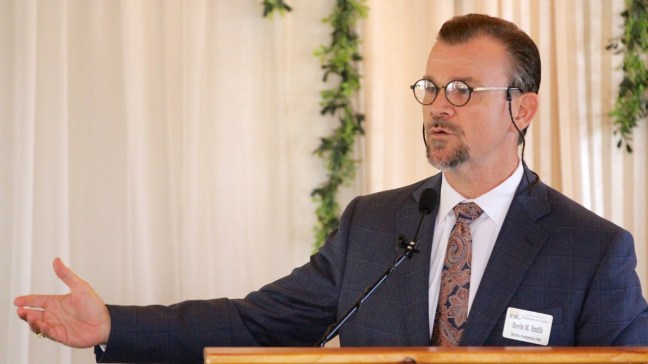
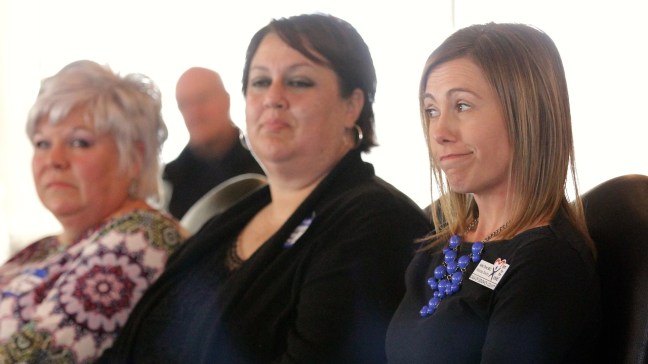
I presented the long , drawn out CINC process to the Sedgwick Co Pachyderm Club and received a wonderful reception with lots of thoughtful questions and feedback. Thanks to Ashley Thorne of CASA of Sedgwick County, Julie White of SFCS, and super foster mom Tonya Burke who served on the Q&A panel. General premise is that since  the length of time is lengthy due to the need for services and overworked case workers, we need good families to foster kids and good people to serve as Court Appointed Special Advocates to walk beside the kids as they deal with a system that sometimes seems to not care about them.

6FC70DD2-E5D7-42BE-B2B5-BC3AC30F66CB

If you know a group of great people who’d like to help these kids, email me and we’ll be happy to present to it too.

It’s about the kids!!!


I’m teaching Criminal Procedure at Friends University!

62BDBB22-D745-4BBF-8CD4-15918A6B803FTime to give back to the community. I’ve been hired to teach criminal procedure to criminal justice and pre-law majors at Friends University in the Spring. I will take a practical approach with two classes (the first one, and one in the middle of the semester) taken up with (1) a panel of prominent law professionals involved in a very high profile case in Sedgwick County, and (2) a moot trial where students will see how to testify and not to testify if called as witnesses. The goal of all law enforcement should be to investigate properly, not violate the Constitution as they do, and only charge cases when there’s zero risk of pretrial dismissals due to unprofessional law enforcement behavior.
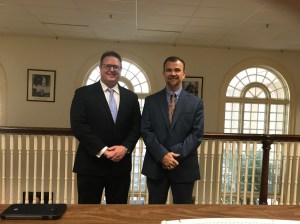
There will be a textbook (casebook, actually), but the lectures will be on the procedures involved from opening a case file to taking it to trial. I’m looking forward to it.

Thrilled to participate in Regent Law Review symposium!

My law school, Regent University School of Law, flew 0E97B25B-B20D-4A54-82B5-21BC1415A6EBme to Virginia last weekend to participate in a panel on technology and its impact on the practice of law. Also at the symposium and on a different panel was a fellow class of ‘99 graduate and law review alumnus Shawn Tuma, who presented on various high tech security issues. Although the information shared by the panelists was terrific, the most memorable part for me was reconnecting with my friend and seeing the campus after almost 18 years.

99A67F64-1889-4115-913E-E6EF4EA93320I love Regent. The school’s mantra, Christian Leadership to Change the World, is what compelled me to attend law school so far away from home—that and the potential opportunity to clerk with the ACLJ, which happened. While many secular law schools are struggling to maintain enrollment and are sacrificing quality of students and with that bar passage rates to stay afloat, Regent has refused to sacrifice its standards just for money. Yet, last year Regent admitted 70 new students, this year more than 90, and its Virginia Bar passage rate exceeds 80 percent in one of the nation’s toughest jurisdictions. It’s gradually increasing enrollment while other schools are still struggling.

I met several law review members. Suffice to say they are brilliant and I’m proud to call them future Regent alumnus. Thanks to Hannah Hempstead for her work putting the symposium together. What an amazing time of spiritual rejuvenation. Getting back to Regent reminded me why I went to law school in the first place. The Law is a calling, and I’m blessed to serve as a Christian lawyer and now judge.